Bromelain is the pineapple enzyme found in many supplements, VapoLung's oral spray among them. This guide explains what it is, how to read GDU and MCU on a label, how fruit, stem and supplement compare, why it is paired with quercetin, and what the research says.

Editorial disclosure: govapolung.com is an independent guide and is not the manufacturer or distributor of VapoLung. It contains affiliate links, and we may earn a commission if you purchase through them, at no extra cost to you. These statements have not been evaluated by the Food and Drug Administration. VapoLung is not intended to diagnose, treat, cure, or prevent any disease. Consult a healthcare professional before use.
Bromelain is not a single substance but a group of enzymes that break down proteins, found in the stem and fruit of the pineapple plant, Ananas comosus. Supplement bromelain is usually extracted from the stem, a by-product of pineapple growing, and sold as a powder in capsules, tablets and combination formulas. The National Center for Complementary and Integrative Health keeps a fact sheet on it, last updated November 2024.
NCCIH bromelain fact sheetBecause bromelain is an enzyme, its strength is measured by activity rather than weight alone. Two units are common on labels:
How much gelatin a gram of the enzyme can break down under test conditions. A label reading "2400 GDU/g" describes a fairly active bromelain powder. VapoLung's label uses this unit: bromelain stem powder standardized to 2400 GDU/g.
An older measure based on milk protein. Labels use one or the other; the two cannot be compared directly without a conversion factor, so compare like with like.
Fresh pineapple contains bromelain, which is why fresh pineapple tenderizes meat and can leave the tongue tingling. Heat processing, as in many canned products, reduces enzyme activity.
The tough stem and core are the richer, cheaper source, and most supplement bromelain is stem bromelain. VapoLung's label specifies stem powder.
Capsules and tablets of bromelain alone, combination products, and botanical blends such as VapoLung's, where bromelain is the third of five ingredients in a 154 mg blend.
"Quercetin with bromelain" is one of the most common combination supplements on the shelf. Quercetin is a plant flavonoid found in onions, apples and tea; many capsules pair the two in one formula. VapoLung does not contain quercetin: its label lists bromelain alongside mullein leaf, ginger root, organic lemon and organic Cordyceps militaris.
NCCIH reports that only a small number of studies have looked at oral bromelain, and that for most uses the research is very limited or tested bromelain mixed with other ingredients, so its own effects are unclear. That is the fair answer to "what is bromelain good for": it is a well-known enzyme with limited clinical evidence.
NCCIH describes oral bromelain as "well tolerated", with stomach upset and diarrhea as the most common side effects. Little is known about its use during pregnancy or breastfeeding, and anyone who takes medicine should talk with a health care provider before using it. Because it comes from pineapple, anyone who avoids pineapple should check with a doctor first.
A group of protein-digesting enzymes from the stem and fruit of the pineapple plant, sold as a dietary supplement powder in capsules, tablets and blends.
Yes. It is found in pineapple fruit and, in larger amounts, in the stem, which is the usual source of supplement bromelain.
NCCIH reports that research on oral bromelain is limited and that many studies tested it with other ingredients, so its own effects are unclear. It is a well-known enzyme with limited clinical evidence.
Gelatin digesting units, a measure of enzyme activity per gram. 2400 GDU/g, as on the VapoLung label, describes the activity of the bromelain powder.
Fresh pineapple contains bromelain, but the amount varies and heat processing reduces its activity. Supplements state a standardized activity on the label.
No. Bromelain is an enzyme from pineapple; quercetin is a plant flavonoid. They are often sold together, but VapoLung contains bromelain and not quercetin.
NCCIH lists stomach upset and diarrhea as the most common and describes oral bromelain as well tolerated. Check with a doctor first if you take medicine, are pregnant or breastfeeding, or avoid pineapple.
VapoLung lists bromelain stem powder (2400 GDU/g) third in a 154 mg blend per 4 sprays; the label does not give its individual amount.
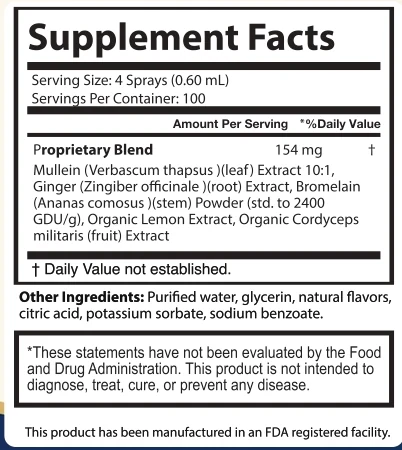
VapoLung lists bromelain stem powder (2400 GDU/g) in its 154 mg blend, with a 60-day guarantee on direct orders. See the full label first.
Open the Official Order Page